
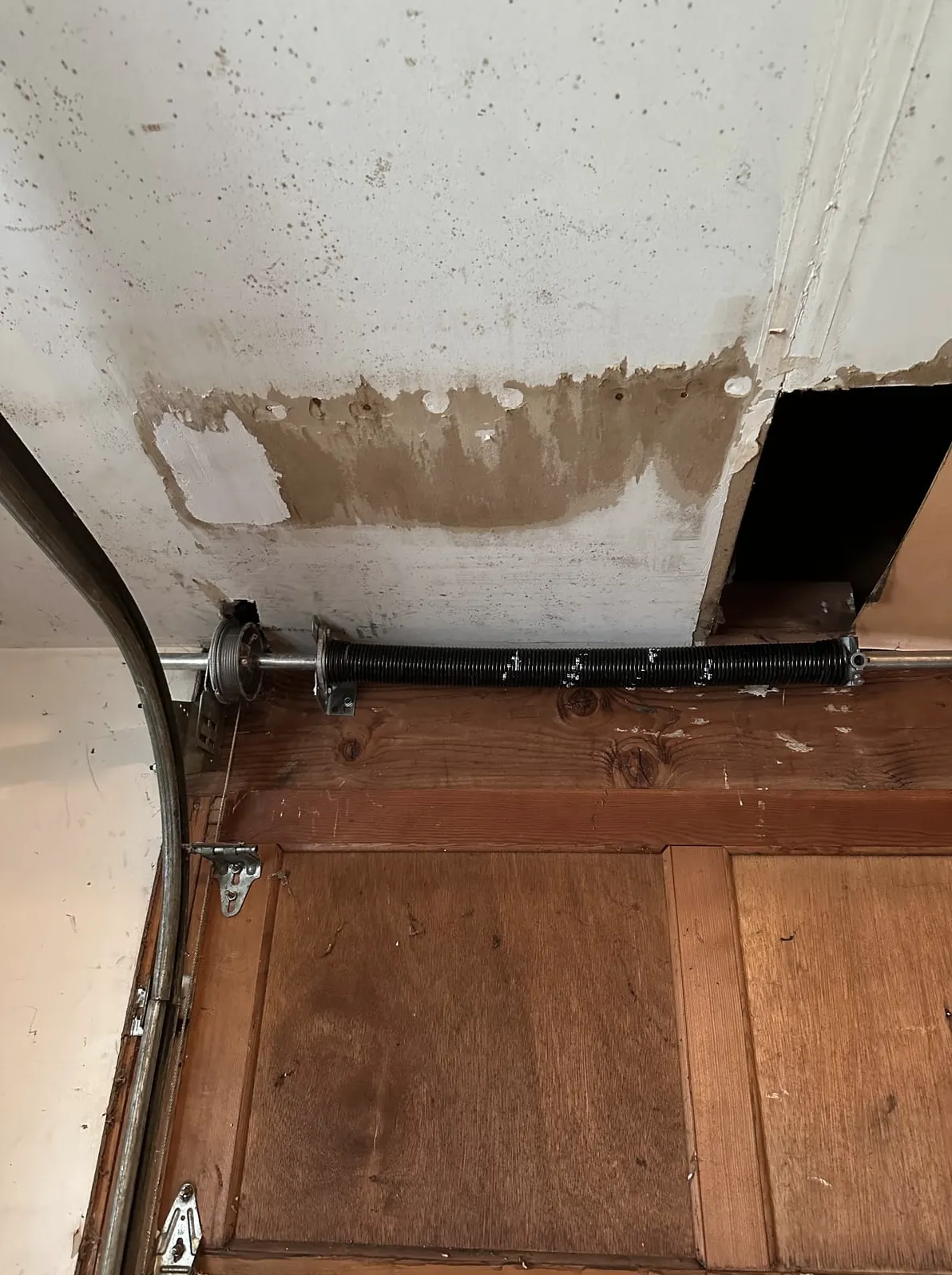
Disconnect the opener, lift the door to waist height by hand, and let go. If it stays put, you're balanced. If it drops or flies up, your springs are off — and your opener has probably been quietly overworking for months.
Most homeowners never think about balance until the opener starts straining, grinding, or flat-out failing. But balance problems don't start with the opener. They start with the springs, and the opener just absorbs the punishment until something breaks.
What an Unbalanced Door Does to Your Opener
Garage door openers are built to do one job: move a door that's already balanced by its springs. The motor isn't designed to lift serious dead weight on its own. When springs weaken or lose tension, the opener starts compensating every time it runs — pulling harder on the chain or belt, drawing more current, and putting extra load on the gears and drive mechanism.
Over weeks and months, this shows up as:
- A motor that sounds strained, especially on the way up
- Slower open and close cycles
- Stripped nylon gears inside the opener unit (a common failure point)
- The opener's force sensors tripping more often, causing the door to reverse unexpectedly
- A shortened lifespan for a unit that should otherwise last well over a decade
In homes around the Inland Empire, this gets worse during temperature swings. Hot inland summers expand metal tracks and hardware, while winter rain can swell wood-paneled doors slightly — both change the load the springs are carrying, and a door that was borderline balanced in spring can tip into a real problem by the time the weather shifts.
Tools You'll Need
- A step ladder (for taller doors)
- Work gloves
- A helper, if your door is heavy or oversized
- A pencil or piece of chalk to mark track position (optional, but useful for repeat testing)
How to Test Your Garage Door's Balance
- Close the door completely. Start from a fully closed position so you get a clean read on the springs.
- Locate the manual release cord. This is the red-handled cord hanging from the trolley on the opener rail. Pull it to disconnect the door from the opener — you'll hear a click, and the door is now running on springs alone.
- Lift the door by hand to about waist height. Use both hands and lift slowly and steadily, not in a quick jerk.
- Let go and watch what happens. A properly balanced door will stay exactly where you left it, or drift down just an inch or two. That's normal.
- Repeat near the top of the travel. Lift the door almost all the way open and let go again. It should stay roughly in place here too, not slam down or shoot upward.
- Reconnect the opener by pulling the release cord again (or running the door through a cycle until the trolley re-engages).
Reading the Results
- Door stays put: springs are doing their job. No action needed beyond routine maintenance.
- Door falls or drops noticeably: springs have lost tension — common with age, and the opener has likely been compensating for a while.
- Door shoots upward on its own: springs are over-tensioned, which is just as hard on the opener and more dangerous to be near.
- Door binds, jerks, or feels uneven side to side: this points to track alignment or roller wear rather than spring tension alone.
Where the Line Is: DIY vs. Technician
Running the balance test yourself is safe and something every homeowner should know how to do. Adjusting spring tension is not a DIY job. Torsion springs are wound under extreme tension and release that energy violently if handled without the right bars and technique — this is one of the leading causes of serious garage door injuries. If your door failed the test, the fix is a job for a trained technician, not a wrench and a Saturday afternoon.
When to Call Rancho Cucamonga Garage Door
If your door didn't stay put during the test, or your opener has been sounding strained, it's time to bring in a technician. We handle Spring Replacement to restore correct tension and take the load off your opener, along with Garage Door Maintenance visits that check spring condition, track alignment, and opener force settings before small issues turn into a stuck or stripped door. Catching an imbalance now, before the winter rain adds extra strain on an already-weak system, saves both the opener and the springs.
If your garage door failed the balance test, or you're just not sure, call Rancho Cucamonga Garage Door for a straightforward inspection and honest recommendation — serving Rancho Cucamonga, Upland, Ontario, Fontana, Claremont, Alta Loma, Etiwanda, and San Dimas.