
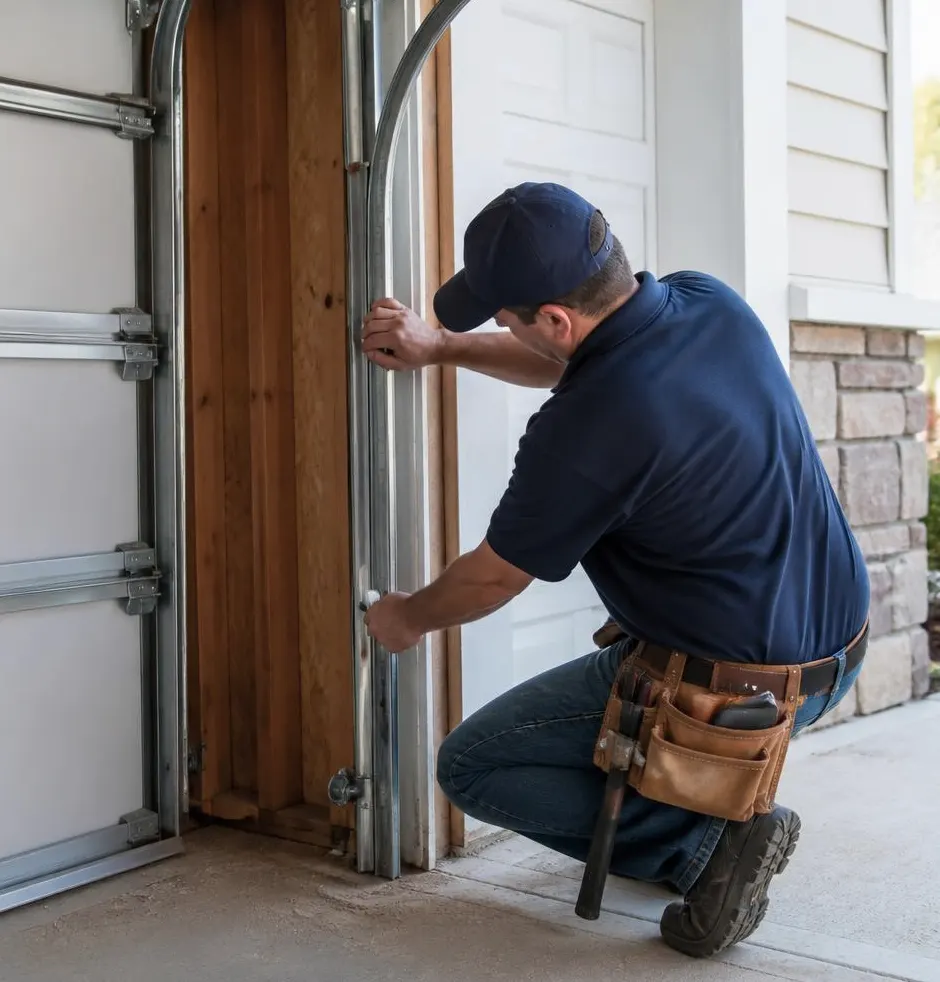
What a Technician Sees This Time of Year
A typical October service call starts the same way: the homeowner says the door was fine all summer, and now it's jerking, groaning, or stopping halfway up. When we get there, the culprit is usually a mix of fine dust that settled into the tracks and rollers over the dry months, combined with the first real rain working its way into gaps the door never had to deal with before. The door isn't broken, exactly — it's just been running dirty and dry for months, and the sudden shift in humidity and temperature exposes every weak point at once.
Why the Season Change Matters Here
Inland Empire summers are long, hot, and dry, which means months of dust, pollen, and sometimes wildfire smoke settling into every moving part of a garage door. Then the weather flips: cooler nights, winter rain, and more moisture in the air. Metal that's been baking and collecting grit all summer suddenly has to deal with condensation and water intrusion. That transition is when small problems — a slightly worn roller, a hairline crack in weatherstripping, a spring that's been quietly losing tension — turn into service calls.
Springs Under Seasonal Stress
Garage door springs do the heavy lifting, literally, and heat cycling followed by cold snaps puts extra fatigue on metal that's already stretched thousands of times. If your door feels heavier than usual when you lift it manually, or the opener strains and makes a different sound than it used to, the spring may be losing tension. This isn't a tighten-it-yourself fix — torsion springs are under serious load and should only be handled by someone trained for spring replacement. Catching a weakening spring in fall, before it snaps on a cold morning in January, saves you from a jammed door with the garage packed for the holidays.
Tracks, Rollers, and Dust Buildup
After a dry summer, tracks often have a layer of fine grit that acts like sandpaper every time the door moves. This wears down rollers faster and makes the door run rough. Before the rains start:
- Wipe down both tracks with a damp cloth to clear dust and debris
- Check rollers for flat spots, cracks, or visible wear
- Look for gaps between the roller and track that suggest the track has shifted
- Avoid spraying oil directly into dusty tracks — it just creates grime; clean first, lubricate after
Weatherstripping and Seals
Rubber seals along the bottom and sides of the door take a beating from summer heat and UV exposure, which makes them brittle right when you need them to keep rain out. Run your hand along the bottom seal — if it's cracked, flattened, or pulling away from the door, water and cold air will find their way in once the rain starts. Side and top seals matter too, especially on doors facing west or south where sun exposure is harshest. Replacing worn weatherstripping is inexpensive compared to dealing with water damage on stored items or a concrete floor that stays damp all winter.
Panels, Hardware, and Rust Spots
Dust combined with the season's first moisture can accelerate rust on hinges, hardware, and any exposed metal panel edges, especially on older steel doors. Look for small rust spots now, while they're easy to treat with a wire brush and touch-up paint, rather than after weeks of rain turn them into bigger problems. If your home has had seismic retrofitting work done, it's also worth confirming the garage door's bracing and anchor points weren't affected, since structural changes nearby can sometimes shift how a door sits in its frame.
Opener Performance
Openers often reveal problems before the door itself does. Listen for grinding, hesitation, or the door reversing unexpectedly — these can point to worn gears, a failing sensor, or a strained motor compensating for a heavier door (often tied back to spring tension). Clean the photo-eye sensors near the bottom of the tracks, since summer dust tends to collect right on the lenses and can cause the door to refuse to close, a complaint we hear a lot this time of year.
A Quick Pre-Winter Checklist
- Test the auto-reverse safety feature by placing a block in the door's path
- Inspect and lubricate hinges and rollers with a silicone-based lubricant, not WD-40
- Clear tracks of dust before the first rain packs it into grime
- Check weatherstripping on all four sides of the door
- Tighten visible hardware, including hinges and roller brackets
- Clean opener sensors and confirm the remote and keypad are working reliably
When to Call Rancho Cucamonga Garage Door
If your door is sagging, making new noises, or the opener is straining, that's the point to call in a technician rather than wait for a full failure during the first storm. We handle garage door maintenance tune-ups that cover track cleaning, lubrication, and hardware checks, and we also do spring replacement when tension has dropped to an unsafe level. If something fails outright — a snapped cable, a door stuck open or shut — our emergency garage door service covers Rancho Cucamonga, Upland, Ontario, Fontana, Claremont, Alta Loma, Etiwanda, and San Dimas, so you're not stuck waiting through a rainy week with an open garage.
Get your garage door checked before the winter rain exposes a problem you didn't know you had. Call Rancho Cucamonga Garage Door today to schedule a seasonal inspection or repair.